Reading a Concept-Stage Plan by Its Open Questions, Not Its Imagery
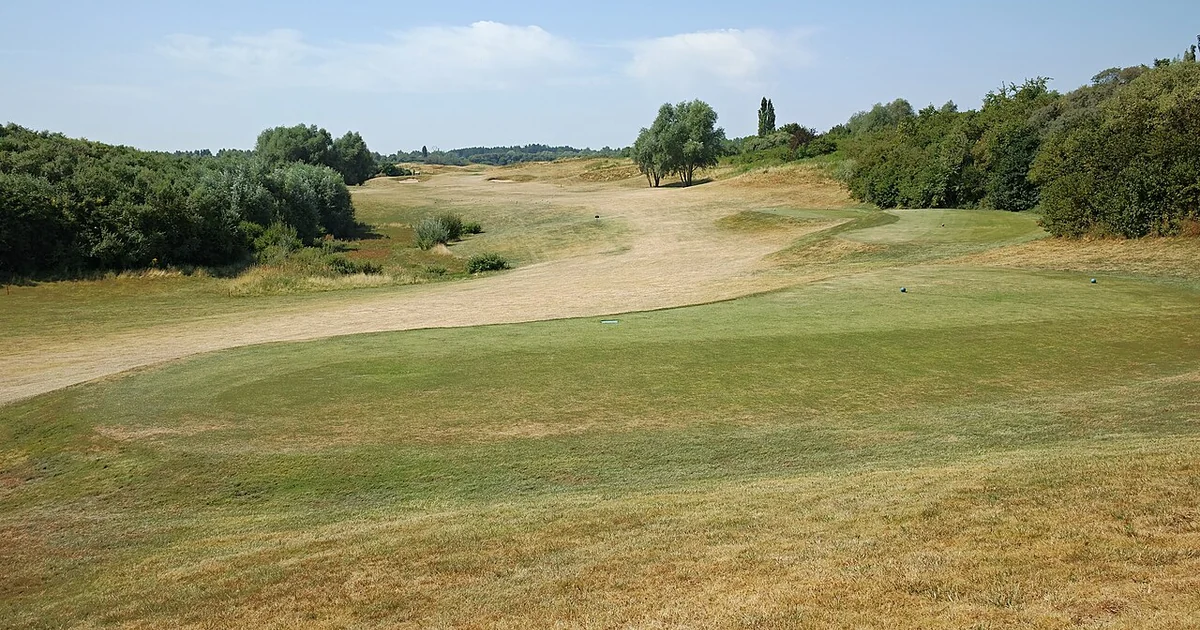
Early-stage development concepts tend to arrive as a mix of inspiration and information. A website may describe a shared lifestyle, show landscape illustrations, and use confident language about how daily life will feel, all while the underlying land, rules, and operating arrangements remain undetermined. The reader's task is not to judge whether the vision is appealing but to map where the plan stops being specific. This article offers a method built around open questions: list what is still undecided, identify who would have to decide it, and note what documentary evidence would show that the decision has actually been made. Working this way turns an attractive concept into a set of checkable claims, and it makes the difference between a plan and a hope easier to see.
Start With an Inventory of Unresolved Items
Before forming an opinion about a concept community, make a plain list of everything the public materials do not settle. For a golf-centered, off-grid concept, the list might include the location and boundaries of any land, the layout and ownership of golf facilities, the source and capacity of power and water, the rules governing who may live there, and the terms under which any shared facility would be built, funded, and run. Write each item as a question rather than a conclusion, because questions keep the gaps visible.
Many concept sites are organized around experience: the morning walk to the course, the quiet evenings, the self-sufficient energy system. Experience is easy to describe because it does not require commitments. The inventory works against that pull. It asks what would have to be true for the experience to exist, and it lets you see how many of those conditions the materials leave open. A long inventory is not a verdict. It is a map of where evidence is still needed.
Assign Each Gap to a Responsible Party
Every open question has someone who would need to answer it. Land availability depends on owners and regulators. Energy design depends on engineers and whatever approvals apply to the site. Rules about residency depend on the governing documents, which may not yet exist. Shared amenities depend on a funding and management structure. When you attach a responsible party to each gap, you learn something about the shape of the project: whether it relies on a single actor making many decisions or on several independent parties that would all have to agree.
This step also clarifies what kind of update would count as progress. A new rendering is a design artifact, not a land decision. A statement that the team is 'exploring options' describes intent, not outcome. Keeping these categories separate prevents an accumulation of softer language from being mistaken for settled facts.
Ask What Evidence Would Close Each Gap
For each open item, name the form of evidence that would actually resolve it. A land question might be answered by a recorded title, a signed agreement, or a formal approval, depending on where the site is. A question about shared golf facilities might be answered by a published operating structure that states who builds, who pays, and who maintains. An energy question might be answered by an engineering study and the permits connected to it. Naming the evidence in advance makes it easier to recognize whether a later message contains it.
Be careful about accepting a summary in place of the underlying record. A sentence stating that a site 'has been secured' tells you less than the instrument that secures it, and you may not have access to that instrument. When the primary evidence is unavailable, note that as its own item in your inventory rather than treating the summary as equivalent.
Compare Your Inventory Against Update Messages
If you have subscribed to project updates, use your inventory as a filter for each message. Mark whether the message changes the status of any item: does it move a question from open to confirmed, or does it add new imagery and new aspirations while leaving the core gaps untouched? Messages that only add vision are common in early projects and can be pleasant to read, but they do not reduce uncertainty.
A simple checklist can guide the comparison. Did this update identify a specific land fact, a specific governing rule, or a specific financial or operating arrangement? Did it name who is responsible for any new commitment? Did it provide a document you can read, or only a description of one? If the answers are mostly no, the update is informative about the project's direction but not about its readiness. Keep a running record so that over time you can see whether the list of open items is shrinking.
Keep the Reader's Own Decisions Separate
Mapping open questions does not require you to make any decision about a concept community. It simply gives you a clearer picture of what you know, what you do not, and what would have to change for your understanding to improve. Some readers will conclude that the open items are too numerous to wait on; others will decide to keep following the project and reassess when specific evidence appears. Both approaches are reasonable as long as they rest on an honest inventory rather than on the most vivid picture in the materials.
The method is most useful when you return to it periodically. A concept at one stage may look very different after several rounds of updates, and an inventory made today gives you a baseline for measuring that change. Treat the list as a living document that you revise as the public record changes, and let its contents, not the tone of the marketing, guide how much confidence you place in each part of the plan.