Reading Early Community Concepts Through the Lens of What Is Still Undecided
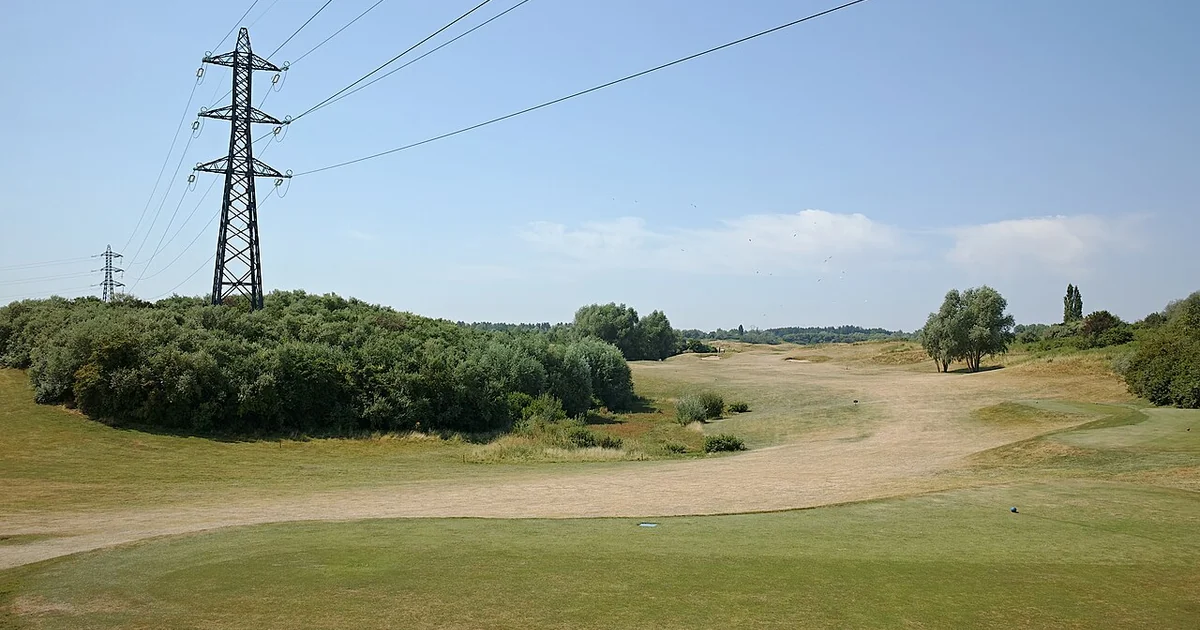
Concept-stage projects tend to arrive as polished images: sunlit fairways, quiet streets, panels glinting on rooftops. Those images are useful for communicating a vision, but they are not the same thing as a finished place, a settled legal arrangement, or a confirmed set of terms. A careful reader learns to notice where the vision ends and the verifiable facts begin. This article offers a method for doing that with any early-stage community concept, using the question of what has actually been decided as the organizing principle. It is general guidance for reading project materials, not an assessment of any specific project's merits, and it does not suggest that any particular decision, purchase, or commitment is appropriate.
Start by Sorting Statements Into Categories
The first practical step is to take any project description and sort its claims into three rough groups: things that are confirmed, things that are stated as intentions, and things that are implied but never explicitly said. Confirmed items are concrete and checkable, such as a recorded land transaction, a filed application, or a named and dated agreement. Intentions are statements of what a project hopes or plans to do, often phrased with words like aims, envisions, or proposes. Implications are the most slippery category, because they arise from imagery and tone rather than from any written commitment.
Concept-stage materials often blend these categories so smoothly that a reader does not notice the shift. A sentence about a solar-powered neighborhood may describe a design goal rather than a built system. A picture of a clubhouse may be an illustration, not a site plan. Writing the three categories down in a simple two-column list is a useful habit. On one side, record what is explicitly confirmed. On the other, record what is only proposed or pictured. The length of the second column relative to the first is itself informative.
When a project's public materials confirm very little beyond the existence of a concept, that is not automatically a reason to dismiss it. It does mean the reader should be explicit with themselves that they are evaluating an idea, not an established place.
Ask What the Sign-Up Actually Gets You
Many concept-stage projects invite visitors to join a mailing list or submit a name and email address for updates. This is a common and understandable practice, but it is worth being precise about what it provides. An update list is a channel for news. It is not, by itself, a reservation, a membership, a contract, or evidence that any particular outcome is coming. A reader who has consented to receive updates can usually unsubscribe, and should be able to identify what data was collected, how it will be used, and who to contact about it.
A useful exercise is to read a project's privacy or contact language and look for specific answers to a few questions. What information is collected? Is it used only for project updates, or shared with others? How is an unsubscribe request handled? Is there a named way to ask for data deletion? If these answers are missing or vague, the reader has learned something important about how much weight to give the relationship at this stage.
Compare Update Emails Against Each Other Over Time
A single update email is a snapshot. A sequence of them reveals a trajectory. Keep the messages in one folder and note, for each one, what new facts were reported, what was restated from earlier messages, and what was promised for a future date. Projects that are making real progress usually produce updates that add concrete, verifiable developments: a filed document, a named partner, a dated milestone that was then met or missed. Projects that mostly repeat the same vision with new imagery are telling you something about their pace.
Pay attention to milestones that quietly slide. If an update once described a timeline and a later one omits it or replaces it with a vaguer phrase, that change is worth recording. Neither a slip nor a silence proves bad faith, since plans change for many legitimate reasons. But a reader who tracks the changes is better equipped than one who only sees the latest email.
Check the Golf and Energy Claims Separately
Golf-centered and solar-powered concepts each raise their own questions, and it helps to evaluate them separately rather than letting one enthusiasm carry the other. For a golf concept, ask whether the course, its land, its design, and its operating arrangements have been described in enough detail to be checked. Who would own the course? Who would maintain it, and how would that cost be funded? Who would have a say in its use? These are governance and cost questions, and they are often unanswered at the concept stage.
For an off-grid energy concept, the relevant questions are technical and operational. What is the stated energy source, and what backup, if any, is described? How would the system be sized, and what has been modeled rather than built? Has any independent engineering assessment been referenced? A project that describes its energy goals in general terms has not yet given the reader anything to test. Treat solar and off-grid language as a design intention until specifics appear in writing.
A Practical Checklist for Any Concept-Stage Project
Use the following questions as a quick review before forming any opinion about an early community concept. First, which claims are confirmed by a document you could locate, and which are only described? Second, does the project state where it is, who controls the land, and what the governing arrangements would be, or are these left open? Third, what exactly does signing up for updates provide, and how is your information handled? Fourth, have milestones been stated with dates, and have those dates held across successive updates? Fifth, for each headline feature, such as golf facilities or energy systems, what specific technical or operational detail has been given?
If most answers come back as undefined, the honest conclusion is that you are reading about an idea in development. That conclusion is compatible with genuine interest in the concept. It simply means that any decision about time, money, or relocation should wait until far more is confirmed, and that a reader who wants more information should ask the project directly and in writing for the specifics the checklist surfaces.